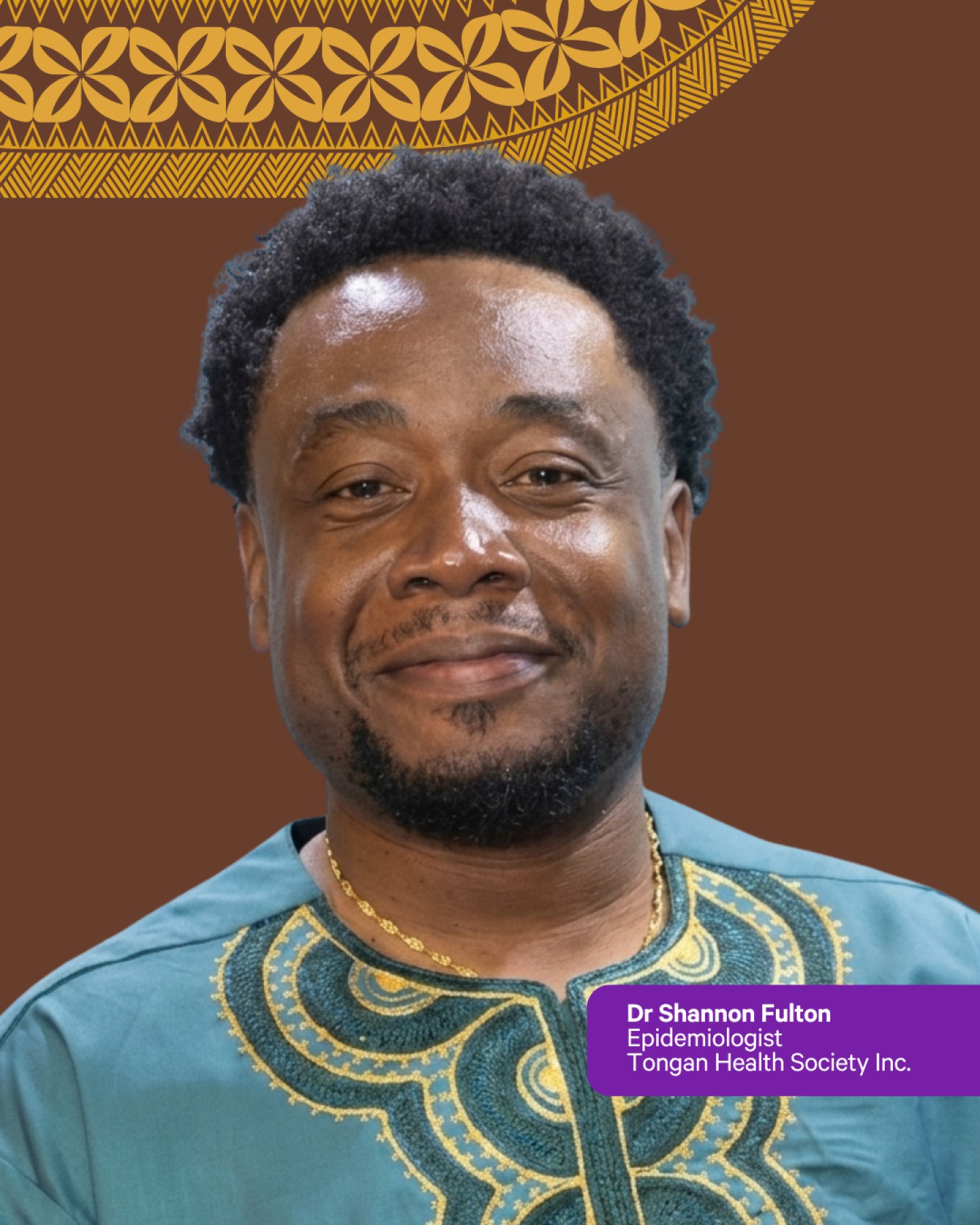
Where you're from, your role and place of work
I am an epidemiologist at the Tongan Health Society (Originally from Liberia, West Africa), based at the Langimālie Kelston Mall Medical Centre in Auckland. My career began in research and public health in Liberia, where I worked across research roles, field epidemiology, national disease surveillance, and health data coordination, including roles with the University of Liberia Pacific Institute for Research and Evaluation (UL-PIRE), Ministry of Health and the Liberia Field Epidemiology Training Program. I later worked as an Assistant Research Fellow at the University of Otago's Centre for International Health, and subsequently as a Research Officer at the Langimālie Research Centre, before moving into my current role.
What are you passionate about and why?
I am passionate about public health research that is grounded in the communities it serves, and that leads to tangible outcomes rather than remaining confined to publication. Having worked on infectious disease surveillance and outbreak response in Liberia, and now on chronic disease prevention within Pacific communities in Auckland, I have seen how effective this work becomes when it is delivered through organisations the community already trusts. I got into the field of public health and subsequently specialising in applied epidemiology and disease control because of my passion for understanding the root causes of disease transmission and implementing data-driven policies to bridge gaps in healthcare equity.
What is your presentation about, and why is it important for our Pacific communities?
My presentation, “Screening and Assessment of Type 2 Diabetes Risk Factors among Pacific Youth Attending Community Health Events in Auckland,” reports findings from a study conducted with colleagues at 10 Tongan Health Society community outreach events across South, Central, and East Auckland in 2024. We screened 138 Pacific and Māori young people aged 16–25 for type 2 diabetes risk, using a combination of survey, HbA1c point-of-care testing, body composition scanning, and height measurement.
The findings indicate a significant opportunity for early intervention. Sixty percent of participants had heard of type 2 diabetes, most commonly through family, yet only 32% considered themselves personally at risk, despite more than half agreeing that anyone can develop the condition. Nearly half reported consuming sugary drinks three or more days a week, and few met recommended intakes of fruit or vegetables. Screening identified one previously undiagnosed case of diabetes, and 72% of participants recorded a “very high” body fat percentage on direct measurement, notwithstanding that most reported being physically active. We also compared ethnicity-specific and standard BMI cut-offs against measured body fat, with implications for how risk is classified in clinical and community settings serving Pacific populations.
This work is significant for the communities we serve because Pacific and Māori people are disproportionately affected by a disease projected to affect 400,000 New Zealanders by 2040, and early-onset diagnosis extends the duration over which an individual carries that risk and its associated complications. Awareness already exists, largely transmitted through family, and the central opportunity lies in connecting that awareness to a sense of personal risk, and in developing the lifestyle-focused, community-based, self-monitoring models of care that young people identified as their preference.
Words of advice/inspiration for people looking to pursue a similar career
My ultimate advice to anyone entering this field is this: always build relationships with the communities and organizations already trusted by the people you are trying to reach, and let the questions you ask be informed by direct experience rather than assumptions.
***
The PMA Conference will be hosted in Auckland from 5-7 August. For more information and to register, visit the website here.